Buy Nothing Day is a day set aside internationally to protest overconsumption. With North America as the face of this bad habit, Buy Nothing Day aims to change consumer attitudes in rich countries especially.
Founded in 1997 by Canadian artist, Ted Dave, in Vancouver, Buy Nothing Day sounds simple, but the campaign speaks to an array of issues far more complex than merely restraining oneself from shopping on a single occasion. It links North America’s consumer habit to some of the world’s most challenging problems. These include environmental degradation, corporate greed, economic disparity, government failures, and security.
The social purpose of Buy Nothing Day is to persuade consumers to be wiser, less wasteful, and save Mother Earth. Buy Nothing Day conscientizes consumers on rising overindulgence in inessentials. The campaign emphasizes environmental pollution, neglect, and lack of judgment by North America’s consumers. These habits affect global insecurity and inspire repulsion against the West. The corporate sector is a major target for this movement. The group perceives North American corporations’ marketing approach as predatory – one that thrives on the vulnerabilities of consumers.
Buy Nothing Day combines virtual and in-person activities to drum home its message. The campaign, known for its use of provocative strategy, portrays Black Friday shoppers as weak and overpowered. It uses symbols like zombies and clowns that paint embarrassing pictures of spendthrifts. Clearly, the approach runs counter to the compelling images that influence consumers’ purchasing decisions. That is the objective. As one would expect, Buy Nothing Day strikes a nerve and critiques have condemned the group’s approach.
Corporate industries like to tell consumers to spend liberally or risk having a dead economy. But the shredding of credit cards at mall entrances on Buy Nothing Day symbolizes a rejection of this business culture. Most notable are the days the movement chooses to observe Buy Nothing Day – Black Friday and the Saturday after United States’ Thanksgiving Day. Essentially, the campaign pitches a revered family occasion against vanity in its attempt to discourage families from engaging in a wasteful and costly habit. Even Santa makes an appearance, asking consumers to “rise above it.”
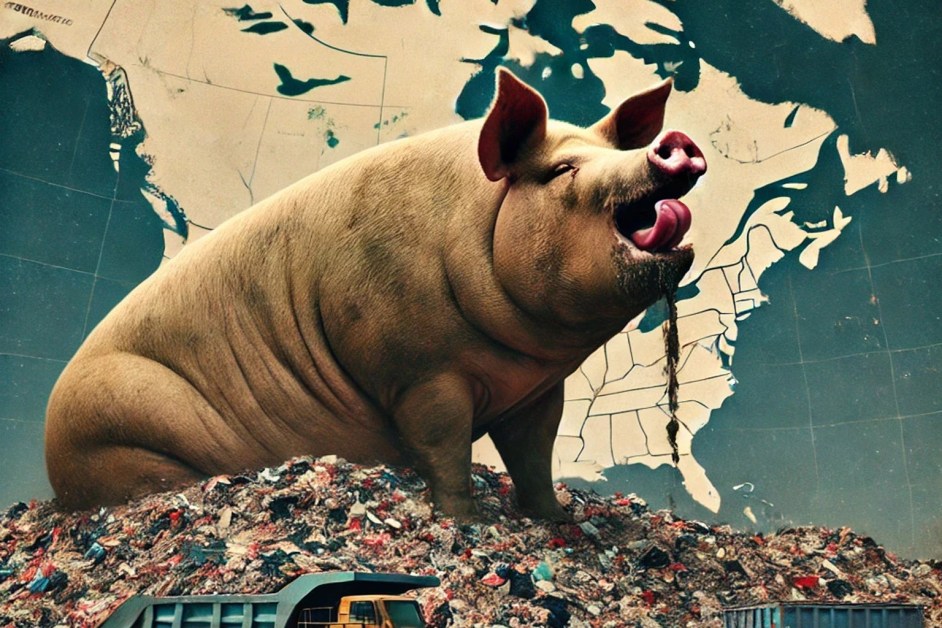
The most telling of all – symbol of a pig. The size of this pig sitting across North America, licking its lips and burping, paints a shameful picture of the people in this zone as the planet’s most voracious consumers. Against pleasure and pride, Buy Nothing Day invokes disgust and shame. The giant pile of waste that emerges following the pig’s burps is disgusting. It is nothing like the privilege associated with consumption in North America.
“The average North American,” the campaign maintains, consumes “five times more than a Mexican, ten times more than a Chinese and thirty-times more than a person from India.”
Ultimately, the question is whether a once-a-year event adequately tackles the significant issues the Buy Nothing movement aims to address. The image of a pig surrounded by a landfill may indeed provoke strong reactions. However, like many of the solutions activists propose for the world’s pressing problems, this group’s approach may appear to be too little and merely symbolic.

The author, Antoinette H. Condobrey, wrote the initial version of the piece for the Gbi Voice and Gbi Community in 2018.
 Antoinette H. C.